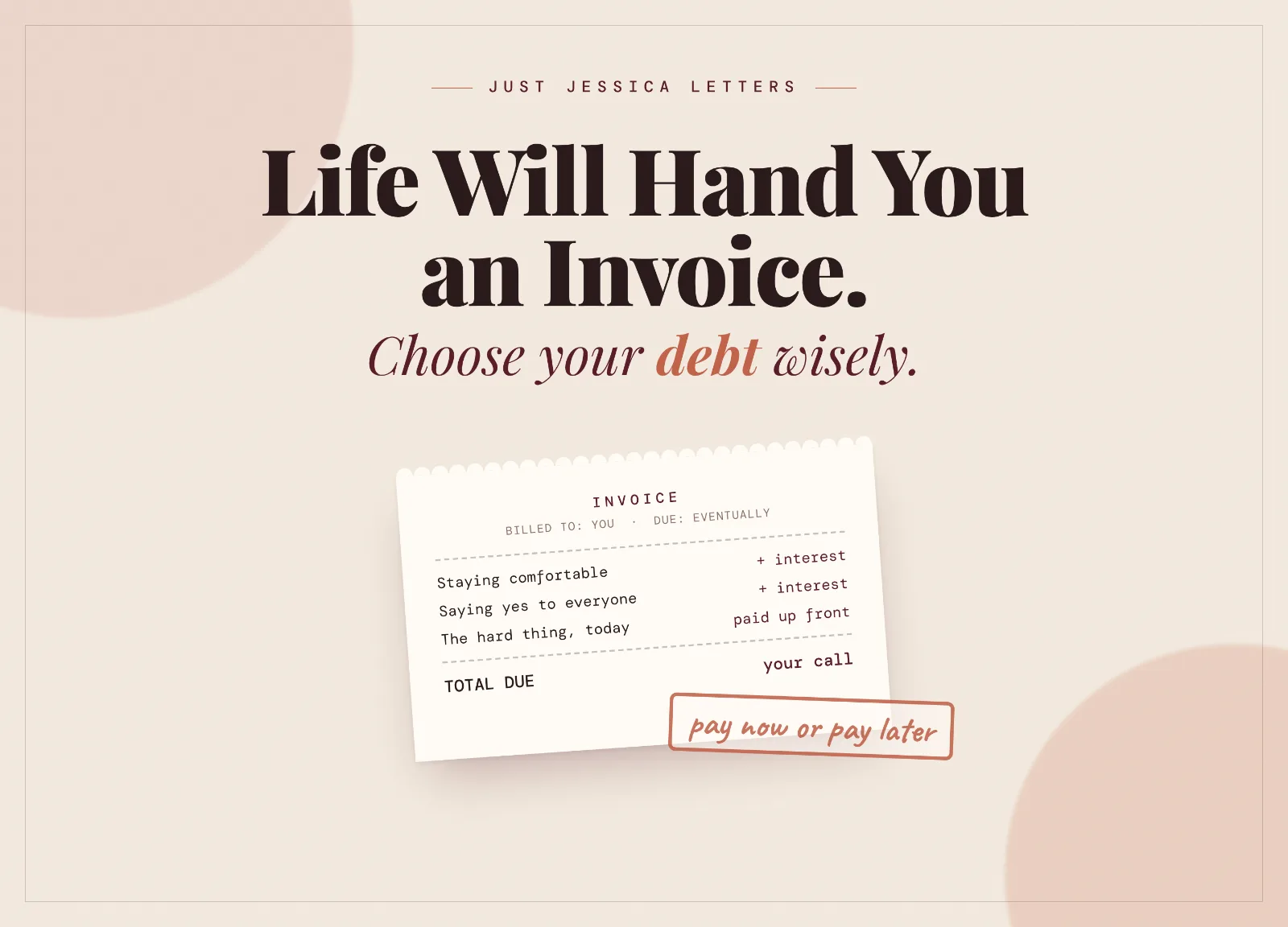
Staying has a price. Walking away has a price. Starting over has a price. No matter what, life is going to hand you an invoice. Choose your debt wisely.
Life Will Hand You an Invoice: Choose Your Debt Wisely
Staying has a price. Walking away has a price. Starting over has a price. No matter what, life is going to hand you an invoice. Choose your debt wisely.
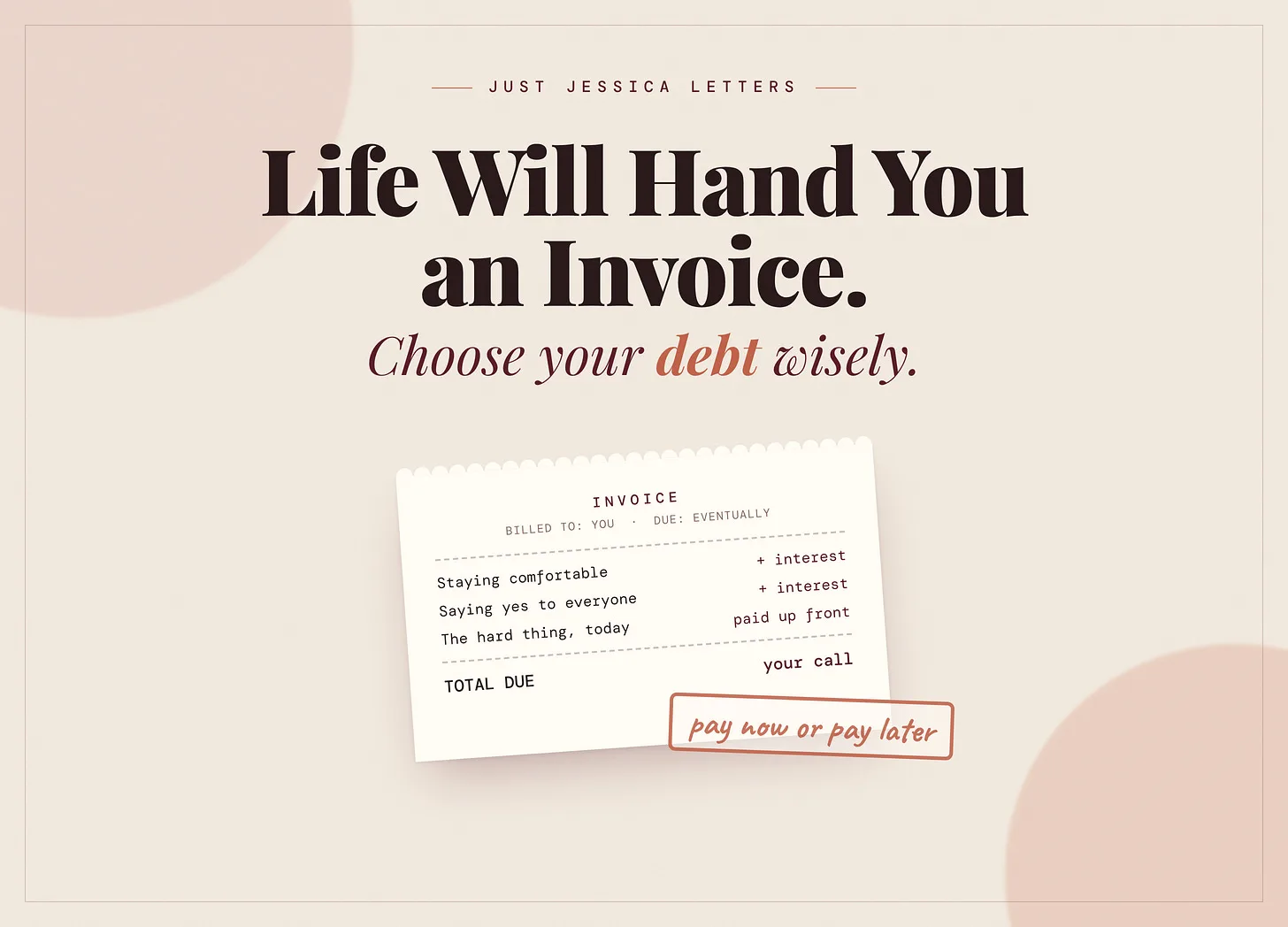
Life Doesn’t Offer Free Choices.. Every Decision Comes With a Cost
There comes a moment in life when you realize that every decision carries a price tag.
Not every price is measured in dollars. Some are measured in sleepless nights, unanswered questions, broken promises, missed opportunities, and pieces of yourself you gave away trying to keep everything together.
Sometimes, the cost is your peace.
Sometimes, it’s your time.
Sometimes, it’s the person you could have become if you had found the courage to make a different decision.
And sometimes, the most expensive thing you will ever do is convince yourself that doing nothing isn’t costing you anything.
The truth is, every choice has a price. Even refusing to choose is a decision with consequences.
You can stay where you are and pay for the comfort of familiarity. You can walk away and pay for the uncertainty of letting go. Or you can start over and pay for the courage it takes to build something new.
But here’s what many people overlook: The goal isn’t to find a life without sacrifice. It’s to stop sacrificing the things that matter most for the things that matter least.
Because sooner or later, life will hand you an invoice.
And when that moment comes, you deserve to know exactly what you’ve been paying for.

The Price of Staying.. When Familiarity Becomes Your Most Expensive Habit
Staying can feel easier than leaving.
You know the people. You understand the circumstances. You’ve learned how to navigate the disappointments, manage the tension, and adjust your expectations.
You’ve invested time, love, energy, and effort.
And the thought of walking away from everything you’ve invested can feel like admitting defeat.
But consider this:
What if the price of staying is becoming more expensive than the price of leaving?
What if maintaining your current situation requires you to silence your needs, abandon your dreams, overlook your boundaries, or continuously compromise your self-respect?
What if the very thing you’re desperately trying to preserve is slowly taking away the person you used to be?
Not every difficult situation requires an exit. Relationships can heal. Careers can improve. Commitments can become stronger through honest communication and mutual effort.
But there’s a difference between staying to build something meaningful and staying because you’re afraid of what happens next.
The Emotional Debt of Holding On Too Long
Emotional debt doesn’t always announce itself.
It accumulates quietly.
Every time you pretend something doesn’t hurt when it does.
Every time you excuse behavior that repeatedly crosses your boundaries.
Every time you tell yourself, “Things will get better,” without seeing any meaningful change.
Every time you put your happiness on hold for a future that never seems to arrive.
Eventually, those small withdrawals begin to add up.
And one day, you may find yourself emotionally exhausted, wondering how you ended up so far away from the life you imagined.
Staying isn’t automatically a mistake. But staying without acknowledging the cost can become one.
When Loyalty to Others Becomes Betrayal of Yourself
Loyalty is admirable.
Commitment matters.
But loyalty should never require the complete abandonment of your identity.
You can love someone deeply and still recognize that the relationship isn’t healthy for you.
You can appreciate an opportunity and still acknowledge that you’ve outgrown it.
You can honor your history without agreeing to make it your future.
There is nothing inherently noble about suffering indefinitely to prove how much you care.
Sometimes, the most important promise you need to keep is the one you made to yourself about the kind of life you want to live.
The Difference Between Staying Out of Love and Staying Out of Fear
Ask yourself:
If I weren’t afraid of the unknown, would I still choose this?
It’s not a perfect test, but it’s a powerful question.
Love can inspire patience, compassion, and difficult conversations.
Fear can encourage avoidance, self-doubt, and acceptance of circumstances you would otherwise challenge.
The difference often becomes visible in your reasons for staying.
Are you staying because there’s genuine progress, mutual respect, and a future worth building?
Or because you’re afraid of being alone, disappointing people, losing security, or discovering what life looks like without the familiar?
Don’t confuse the fear of change with proof that staying is right.
And don’t confuse a difficult season with proof that leaving is necessary.
Look honestly at the pattern, not just the moment.
The Price of Walking Away.. Why Leaving Can Hurt Even When It’s Right
Walking away is often described as freedom.
And sometimes, it is.
But freedom doesn’t always arrive feeling like relief.
Sometimes, it arrives wrapped in grief.
You can know that a chapter needs to end and still mourn everything you hoped it would become.
You can make a healthy decision and still cry afterward.
You can recognize that something is no longer right for you and still miss it.
Walking away doesn’t erase love, memories, effort, or emotional attachment. It simply acknowledges that those things are not always enough to justify staying.
Walking Away Doesn’t Mean You Never Cared
One of the hardest parts of leaving is accepting that your decision may be misunderstood.
Some people will only remember the moment you walked away.
They may never see the conversations you attempted, the chances you offered, the compromises you made, or the nights you wrestled with your decision.
But you don’t have to make your pain visible to everyone for it to be real.
And you don’t have to turn someone else into a villain to recognize that your paths need to separate.
Sometimes, two people can care about each other and still be unable to create a healthy future together.
Sometimes, a workplace can offer valuable experience while no longer offering room for growth.
Sometimes, something can have been right for a season without being right for a lifetime.
Leaving doesn’t necessarily mean the past was meaningless. It means the past no longer gets to make every decision about your future.
Sometimes Peace Requires a Painful Goodbye
Peace isn’t always the absence of conflict.
Sometimes, peace begins with a difficult conversation.
A boundary that feels uncomfortable.
A resignation letter you never imagined writing.
A decision to stop chasing an outcome you cannot control.
Or the acceptance that someone may never give you the apology, understanding, or closure you’ve been waiting for.
The price of walking away may include loneliness, uncertainty, and the painful process of adjusting to a different life.
And those costs should never be minimized.
But neither should the cost of remaining somewhere that repeatedly compromises your well-being.
The Courage to Release What You Cannot Repair Alone
There are things you can work through with patience, honesty, accountability, and shared effort.
And there are things you cannot fix through your effort alone.
You cannot communicate enough for two people.
You cannot take responsibility for someone else’s choices.
You cannot force mutual respect, genuine commitment, or lasting change.
There comes a point when continuing to carry what requires two sets of hands is no longer perseverance. It’s exhaustion.
Walking away can be a brave decision, but it should also be a thoughtful one.
If leaving involves financial dependence, children, safety concerns, or major responsibilities, the healthiest next step may be careful planning, professional guidance, or building a support system before making a change.
Courage isn’t always a dramatic departure. Sometimes, courage is quietly preparing to reclaim your choices.
The Price of Starting Over.. Paying for a Future You Haven’t Seen Yet
Starting over sounds beautiful when you’re talking about it from a distance.
New beginnings.
Fresh opportunities.
Another chance to get things right.
But when you’re standing in the middle of a life you didn’t expect to rebuild, starting over can feel terrifying.
You may have to learn new routines, develop new skills, rebuild financial stability, form new relationships, or rediscover who you are outside of the circumstances that once defined you.
And perhaps the hardest part is that there’s no guarantee everything will unfold the way you hope.
Starting over requires you to invest in a future you cannot fully see.
Starting Over Isn’t Failure.. It’s Choosing a Different Direction
Imagine taking a road trip and discovering that the route you’ve chosen will never lead to your destination.
Would you keep driving in the wrong direction simply because you’ve already traveled so many miles?
Of course not.
You would reassess, change course, and find another way forward.
Yet in life, people often feel pressured to remain on the same path because they’ve already invested years in it.
Years in a relationship.
Years in a career.
Years pursuing a dream that no longer reflects their values.
But the time you’ve already invested doesn’t obligate you to spend the rest of your life investing in the same direction.
Changing course doesn’t erase what you’ve learned.
Starting over doesn’t mean you’re back at zero. It means you’re beginning again with experience you didn’t have before.
The Fear of Beginning Again Versus the Regret of Never Trying
Fear often asks, “What if this doesn’t work?”
But growth invites a different question:
What if I never give myself the chance to find out?
What if the career you’ve been considering leads to work that feels meaningful?
What if rebuilding your confidence introduces you to strengths you didn’t know you possessed?
What if the life waiting beyond your comfort zone isn’t perfect but is more aligned with who you are becoming?
Not every risk is worth taking. And not every fresh start is better than what came before.
But uncertainty alone shouldn’t make your decisions.
There is a difference between protecting yourself from unnecessary harm and protecting yourself from every possibility of discomfort.
One is wisdom.
The other can become a cage.
Rebuilding Your Life One Brave Decision at a Time
You don’t have to rebuild everything overnight.
A fresh start can begin with something small.
Updating your résumé.
Making a realistic financial plan.
Reconnecting with someone who supports you.
Seeking professional advice.
Learning a skill.
Setting a boundary.
Giving yourself permission to imagine a future that looks different from your past.
Progress doesn’t always announce itself through dramatic transformations.
Sometimes, progress is simply waking up and making one decision that respects the person you’re working to become.
And then doing it again tomorrow.
Not Every Debt Is Destructive.. Some Sacrifices Are Investments
Here’s a distinction worth remembering:
Some decisions drain your future. Others require sacrifice to build it.
Both can be uncomfortable, but they are not the same.
Studying for a degree may cost you leisure time, yet move you toward a meaningful goal.
Building a business may require discipline, financial planning, and patience, with no guarantee of success.
Repairing a relationship may require vulnerability, difficult conversations, and genuine accountability.
Prioritizing your well-being may require disappointing people who benefited from your lack of boundaries.
These sacrifices can be worthwhile because they serve something you consciously value.
But constantly sacrificing your dignity, safety, or sense of identity without meaningful improvement is a different kind of cost.
Think of it like an invoice with two categories.
Expenses that keep you stuck:
Repeatedly ignoring your own boundaries
Avoiding necessary conversations out of fear
Remaining committed solely because of past investment
Giving up meaningful goals to maintain appearances
Investments that support your future:
Learning, healing, and developing new skills
Building healthy relationships through mutual effort
Creating financial and emotional stability
Accepting temporary discomfort for sustainable growth
The key isn’t to avoid every sacrifice.
It’s to recognize whether your sacrifices are connected to a future you genuinely want.
The Most Dangerous Invoice Is the One You Keep Ignoring
Some bills arrive immediately.
Others accumulate over years.
The consequences of a decision aren’t always visible when you make it.
You may not recognize the cost of ignoring your dreams until you realize how long you’ve postponed them.
You may not notice the weight of constantly pleasing others until you struggle to remember what you actually want.
You may not recognize how much your circumstances have changed you until something reminds you of who you used to be.
The Time You Cannot Get Back
Time is one of the few things you can spend without noticing the balance decreasing.
You can earn more money.
You can develop new skills.
You can create new opportunities.
But you cannot reclaim every year spent waiting for circumstances to change on their own.
That doesn’t mean time spent struggling is wasted. Difficult seasons can teach valuable lessons.
It means your remaining time deserves intention.
The Opportunities You Keep Postponing
There’s always a reason to delay.
When things settle down.
When the timing is perfect.
When you’re more confident.
When everyone understands.
When you’re no longer afraid.
But sometimes, waiting for perfect conditions becomes another way of avoiding a necessary decision.
You don’t need to act recklessly.
You do need to recognize when preparing has turned into postponing.
The Parts of Yourself You Quietly Surrender
Perhaps the greatest cost isn’t what you lose around you.
It’s what you gradually stop allowing within yourself.
Your creativity.
Your confidence.
Your voice.
Your willingness to hope.
Your belief that you deserve a meaningful life.
These losses are difficult to measure, which makes them easy to dismiss.
But invisible costs are still costs.
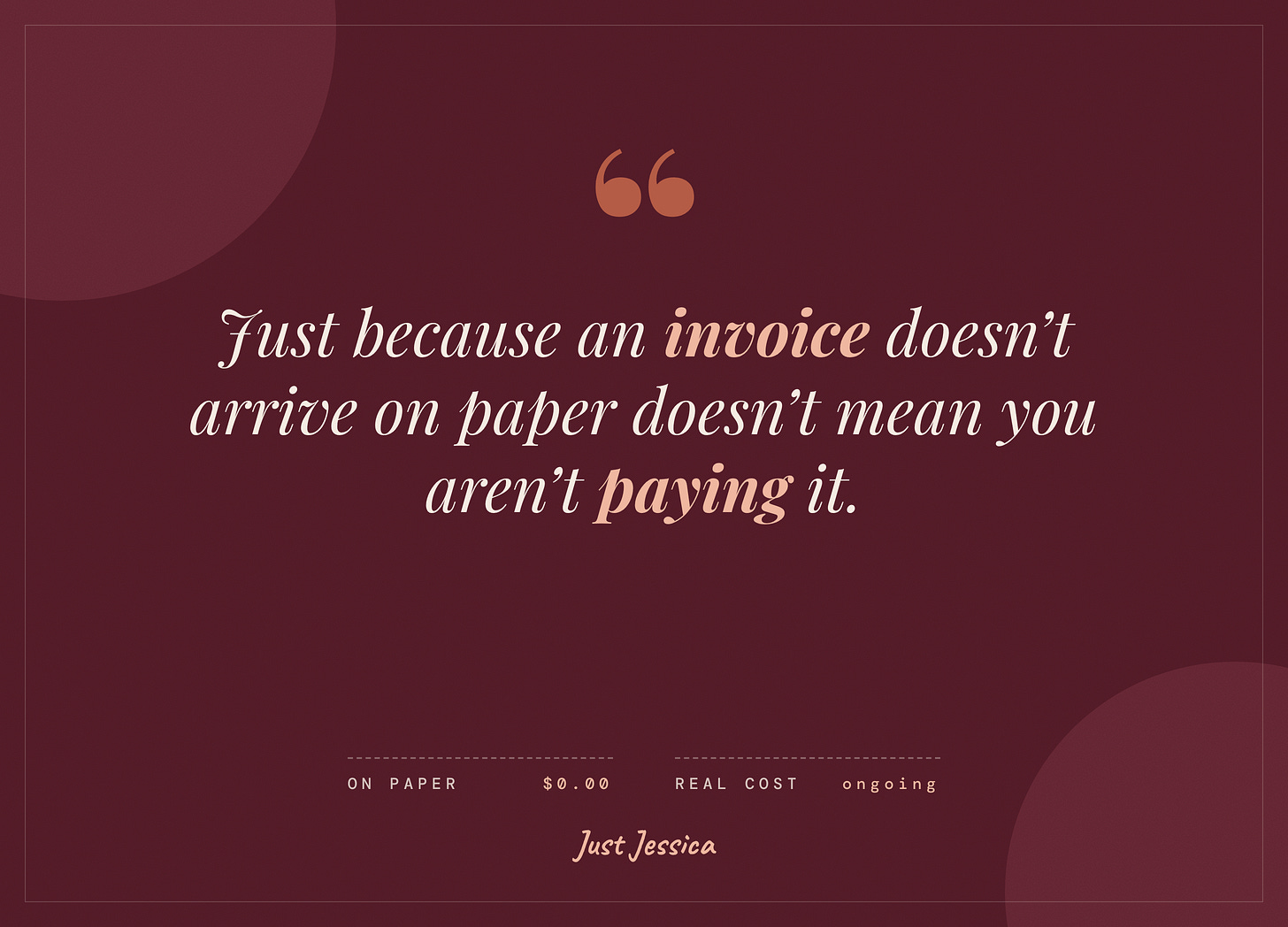
Just because an invoice doesn’t arrive on paper doesn’t mean you aren’t paying it.
How Do You Know Which Price Is Worth Paying?
When you’re facing a difficult life decision, the right answer isn’t always immediately obvious.
You may have competing responsibilities, limited resources, deep emotional attachments, and legitimate reasons to feel uncertain.
Instead of asking only, “Which choice will hurt less?” consider asking questions that reveal what each decision means for your future.
1. What Is This Decision Costing Me Right Now?
Look beyond the obvious.
Consider your emotional well-being, relationships, financial stability, physical safety, personal values, and opportunities.
Be specific about what you’re experiencing rather than relying only on how things feel during a particularly good or bad day.
2. What Could This Decision Cost Me Five Years From Now?
Imagine the likely consequences if nothing meaningfully changes.
Would you feel proud of the direction you’re taking?
Would you regret not taking action sooner?
What opportunities might remain available, and which might become harder to pursue?
The future is uncertain, but thinking beyond immediate discomfort can help you see the bigger picture.
3. Am I Choosing From Fear, Love, Obligation, or Purpose?
Motivation matters.
A decision rooted in love and genuine commitment may look very different from one rooted in guilt or fear of judgment.
Ask whether your choice reflects your values or simply protects you from temporary discomfort.
4. Is This Sacrifice Helping Me Grow or Keeping Me Trapped?
Healthy growth can be difficult.
So can unhealthy stagnation.
The difference often lies in whether there’s meaningful progress, respect, opportunity, and a realistic reason to believe your efforts matter.
5. What Support Do I Need to Make a Responsible Decision?
Choosing yourself doesn’t mean ignoring practical realities.
Sometimes, wisdom looks like building savings, seeking counseling, speaking with a trusted person, exploring alternatives, or developing an exit strategy.
You don’t have to choose between courage and preparation.
The wisest decisions often require both.
Choose the Struggle That Leads Somewhere Worth Going
Life will challenge you regardless of which road you take.
Staying may require patience.
Leaving may require grief.
Starting over may require humility, effort, and uncertainty.
There is no universally painless path.
But there is a meaningful difference between a struggle that keeps repeating itself and a struggle that helps you move toward something better.
One leaves you constantly explaining why things haven’t changed.
The other gives you a reason to keep building, even when progress is slow.
And here’s something important:
You do not have to prove your strength by choosing the most painful option.
You don’t earn extra credit in life for suffering unnecessarily.
You don’t have to destroy everything you’ve built to demonstrate independence.
And you don’t have to remain in a situation that continually harms you to prove your loyalty.
Choose based on your circumstances, your responsibilities, your values, and the future you’re trying to create.
Sometimes, that means staying and doing the difficult work of rebuilding.
Sometimes, it means recognizing that the work can no longer be done together.
And sometimes, it means accepting that your next chapter requires an entirely new beginning.
Whatever you choose, make it a conscious decision rather than a lifelong surrender to fear.
When Life Hands You the Invoice, Make Sure You Recognize What You’re Paying For
One day, you’ll look back at the decisions that shaped your life.
Some will make you proud.
Some will remind you of lessons you had to learn the hard way.
And some may leave you wondering how things might have turned out if you had made a different choice.
But your life isn’t a single decision.
It’s a collection of choices, adjustments, lessons, sacrifices, and opportunities to begin again.
You can change your mind when new information becomes available.
You can acknowledge a mistake without allowing it to define you.
You can release an old dream without losing your ability to dream.
You can choose differently tomorrow than you chose yesterday.
So before you sign another emotional contract, surrender another year, or make another sacrifice in the name of keeping everything the same, look closely at what you’re receiving in return.
Is it peace?
Is it growth?
Is it genuine connection?
Is it stability, purpose, or a future that reflects your values?
Or are you paying a price simply because you’ve grown accustomed to the bill?
Remember:
Staying has a price.
Walking away has a price.
Starting over has a price.
No matter what, life is going to hand you an invoice.
But you still have a say in what you’re willing to pay for.
And when the price is high, make sure the life you’re building is worth the investment.
Because the question isn’t whether life will cost you something.
The question is whether you’re spending your life maintaining what no longer serves you.. or investing in what you’re capable of becoming.
Choose your debt wisely.
Frequently Asked Questions About Life Choices, Walking Away, and Starting Over
How do you know when staying is costing you too much?
Staying may be costing too much when maintaining a situation consistently compromises your safety, self-respect, emotional well-being, or important personal values without meaningful progress. Consider whether the circumstances are temporary, whether change is possible, and whether your efforts are being reciprocated.
Why is walking away so difficult, even when it’s the right decision?
Walking away can be difficult because emotional attachment, shared memories, financial responsibilities, fear of uncertainty, and hope for change don’t disappear when you decide to leave. A decision can be appropriate for your future while still involving real grief and loss.
Is starting over in life worth the risk?
Starting over can be worthwhile when your current direction no longer aligns with your values or goals and a different path offers a realistic opportunity for improvement. The decision should consider practical resources, potential consequences, personal responsibilities, and available support.
How do you choose yourself without feeling guilty?
Choosing yourself begins with recognizing that your needs and boundaries matter alongside those of other people. Guilt may still arise, especially if you’re accustomed to putting everyone else first. You can act with kindness and responsibility without sacrificing your well-being to meet every expectation.
What does it mean when people say every choice has a price?
The phrase means that every decision involves trade-offs. Choosing one direction often requires giving up another opportunity, comfort, resource, or possibility. Understanding these costs helps you make more intentional decisions rather than assuming that avoiding change means avoiding consequences.
How can you tell the difference between temporary struggle and long-term unhappiness?
Temporary struggle often has identifiable causes, potential solutions, and signs of improvement. Long-term unhappiness may involve recurring problems, unmet needs, or persistent patterns despite sincere efforts to address them. Looking at the situation over time and speaking with someone you trust can help you evaluate it more clearly.
One Final Thought
You cannot always control the price life places on your circumstances.
But whenever you have a meaningful choice, you can become more intentional about what you’re willing to sacrifice.
Don’t spend your entire future paying for a past you’re afraid to release.
Don’t mistake familiarity for fulfillment.
And don’t forget that sometimes the most worthwhile investment you will ever make is in the person you are still becoming.
Life will hand you an invoice. Choose your debt wisely.
With Love, Just Jessica
— Jessica